AI in Agriculture: Smart Farming Innovations in Texas
Texas has long been a leader in American agriculture, producing more farms and ranches than any other state. Today, that legacy is evolving as artificial intelligence and advanced data technologies begin reshaping how agricultural operations are managed.
Across the state, farmers, ranchers, universities, and technology companies are exploring new ways to apply AI to improve productivity, conserve resources, and strengthen long-term agricultural resilience. From research institutions developing precision agriculture tools to startups building new data platforms for producers, Texas is becoming an important center for innovation at the intersection of agriculture and technology.
How AI Is Transforming Texas Agriculture
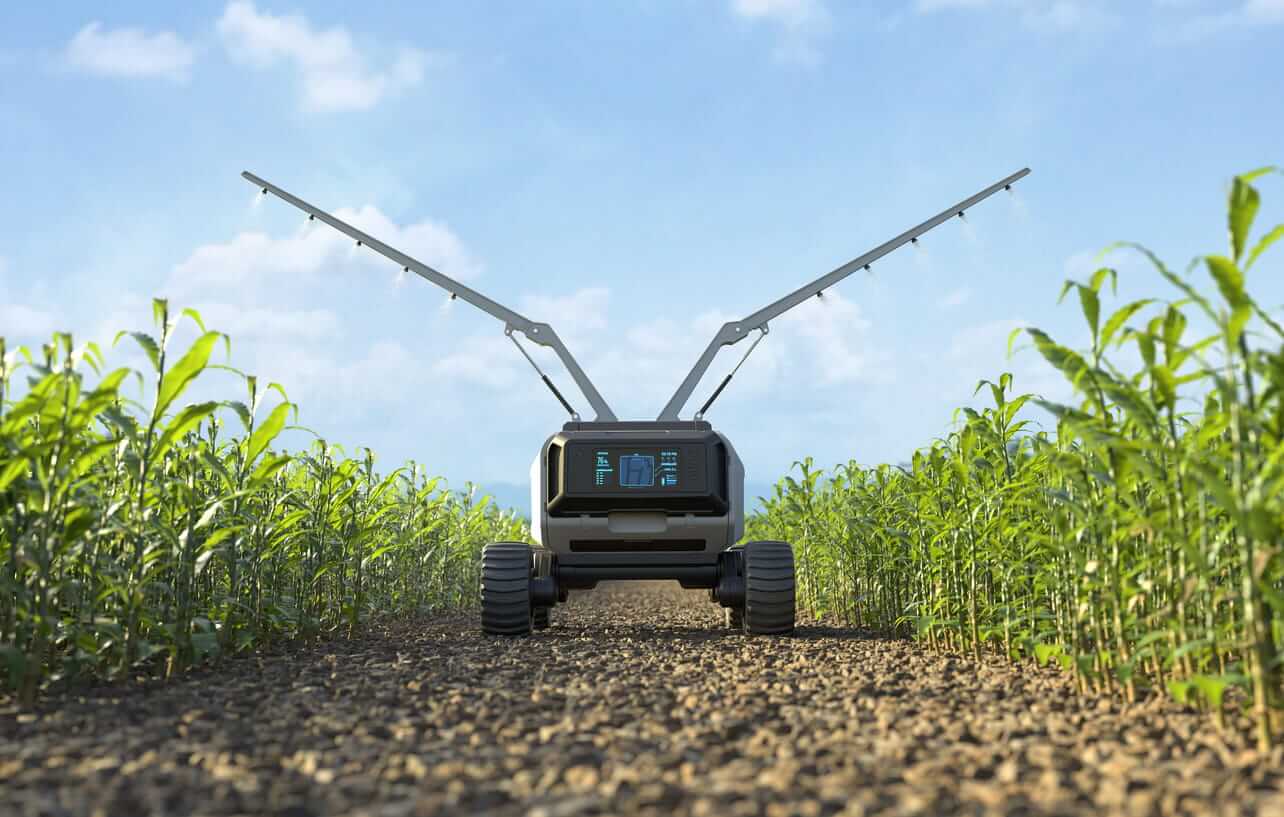
Through sensors, drones, satellite imagery, and machine learning, AI is helping Texas farmers anticipate drought, optimize irrigation, detect crop threats, and predict market prices for crops like cotton and sorghum. By combining traditional practices with data-driven insights, these innovations boost yield, reduce costs, and transform farming into a smarter, more precise operation.
From Traditional Farming to Smart, Data-Driven Operations
Texas has a long legacy of cattle ranching, relying on rotational grazing, selective breeding, and feedlot management. Today, AI in agriculture in Texas enhances these practices with wearable sensors, drones, and machine-learning models that monitor herd health, track weight gain, and optimize feeding schedules. Some ranchers are using AI to analyze herd behavior and environmental data to predict disease outbreaks before symptoms appear, lowering veterinary costs and improving animal welfare.
The Role of Machine Learning, Robotics, and Drones in the Field
At Texas Tech University, a precision agriculture workshop teaches farmers to use drones, machine learning models, and soil mapping to monitor soil moisture, track crop stress, and tailor irrigation and fertilizer applications.
Innovation at Work Across the Lone Star State
From cutting-edge university research to nimble startups, AI in Texas promises to make farming smarter, more efficient, and sustainable, creating a pipeline of innovations ready for real-world use.
Texas Research Institutions Leading Smart Farming Breakthroughs
Researchers at Texas universities are pioneering AI tools, from virtual crop modeling to precision livestock management, that help farmers make faster, data-informed decisions. Texas A&M AgriLife Research has developed “digital twin” technology that collects over 250,000 data points per season on a 200-acre cotton and sorghum farm, generating harvesting recommendations that could save $70 per acre.
Ag-Tech Startups Bringing Practical AI Tools to Farmers
Entrepreneurs are developing AI systems that monitor soil health, optimize irrigation, predict yield, and alert to pests or disease. One local startup uses satellite imagery and AI to provide insights on soil pH, water usage, and crop health for Texas corn farmers, making smart farming accessible to farms of all sizes.
Collaboration Driving Efficiency and Sustainability
Public-private partnerships and tech collaborations support everything from sensor networks to AI-powered soil monitoring platforms. Presently, a Texas startup and Texas A&M are analyzing soil microbiome data with AI to optimize fertilizer use, cutting costs and environmental impact.
Economic Impact and Opportunities
The rise of AI in agriculture is not only improving productivity, but it’s also generating high-tech jobs, attracting entrepreneurs, and creating economic potential for both rural and urban communities. For companies looking to expand their tech footprint, the AI in Texas ecosystem offers a compelling opportunity for investment and innovation.
Boosting Productivity and Creating High-Tech Jobs
As Texas farmers adopt AI-driven processes, demand for specialists in data science, robotics, sensor analytics, and agronomy grows. The rise of precision agriculture supports job growth in both rural and metro areas. Many top Texas tech cities—including Austin, Dallas–Fort Worth, and College Station—serve as talent pipelines through universities and research initiatives such as the Texas A&M AgriLife program and new AI-enabled agriculture research centers that connect engineering, data science, and agricultural innovation.
State Incentives and Investment Momentum in Ag-Tech
Texas’s pro-innovation environment, including incentives such as R&D tax credits and water-conservation grants, and a supportive regulatory climate, attracts capital and ag-tech startups. Information companies in Texas are critical to building the software, analytics, and cloud infrastructure that underpin smart farming.
Why Texas Is the Future of Smart Farming
With strong collaboration among research institutions, entrepreneurs, and supportive state policies, Texas is setting the standard for a new era of precision agriculture and serving as a model for the rest of the country.
A Strong Ecosystem of Research, Business, and Support
With 16 top-tier research universities, the most in the nation, and 600+ PhD scientists at Texas A&M AgriLife Research, Texas leads in ag innovation. Funding through House Bill 1595, the Texas University Fund, and Texas Tech’s Hub Fuel, which has backed 25-35 startups and local job creation keeps the state’s smart-farming ecosystem growing strong.
Explore Ag-Tech Opportunities in Texas
Artificial intelligence is helping modernize agriculture across Texas, giving producers new tools to increase efficiency, conserve resources, and make smarter decisions in the field. As research institutions, technology companies, and agricultural producers continue to collaborate, Texas is building a strong foundation for the next generation of precision agriculture and ag-tech innovation.
The Texas Economic Development Corporation (TxEDC) promotes Texas as a premier destination for business investment and highlights the state’s advantages for companies exploring innovation-driven industries such as agriculture technology, data science, and advanced research.
Organizations considering expansion or new investment in Texas can learn more about the state’s business environment through TxEDC and connect with the Governor’s Texas Economic Development & Tourism Office for project-specific guidance on site selection, incentives, and available resources. Companies can also contact TxEDC or explore Texas regions for business to begin the conversation about building and growing a business in Texas.