The Texas Advantage: How AI and Big Data Are Transforming Investment Decisions
Artificial intelligence (AI) and big data analytics are transforming how investment decisions are made by helping investors, developers, and site selectors reduce risk, improve forecasting, and allocate capital more efficiently. In Texas, these technologies are increasingly embedded in economic development strategies, making the state a national leader in data-driven growth across commercial real estate, infrastructure, capital markets, site selection, and startup investment.
As companies evaluate where to deploy capital in a complex global environment, Texas stands out for its ability to combine advanced analytics, high-performance computing, and public-private collaboration to support smarter, faster, and more confident investment decisions.
How AI and Big Data Are Changing Investment Decision-Making
AI and big data analytics allow decision-makers to move beyond intuition and historical averages toward predictive, real-time insights. By analyzing massive datasets, ranging from labor availability and infrastructure capacity to energy demand, logistics flows, and financial performance, AI tools can surface patterns and forecast outcomes before capital is committed.
For investors and developers, this means:
- More accurate demand forecasting for real estate and infrastructure projects
- Smarter site selection grounded in workforce, logistics, and growth trends
- Improved risk modeling for large-scale capital investments
- Faster, data-backed decisions in capital markets and startup funding
Texas has embraced these capabilities at scale, integrating analytics into both private-sector strategies and statewide economic development planning.
Texas’ Data Advantage: Technology, Talent, and Scale
Texas’ leadership in AI-driven investment decisions is rooted in its size, diversity, and technological capacity. The state’s economy generates enormous volumes of data across energy, manufacturing, logistics, healthcare, and financial services, creating a powerful foundation for analytics-driven decision-making.
A key differentiator is the depth of Texas computer technology infrastructure, which supports advanced computing, cloud platforms, and AI research at an enterprise level. High-performance computing assets and expanding digital infrastructure enable companies to process complex datasets quickly and securely, a crucial capability for AI-enabled forecasting and modeling.
According to Top Texas Touts, Texas’ labor force exceeds 15.85 million people, one of the largest in the nation, and the state continues to attract Gen Z and Millennial talent critical to analytics, engineering, and data science roles.
Predictive Analytics and Smarter Site Selection
One of the most practical applications of AI and big data in Texas is site selection. Predictive analytics enable companies to evaluate locations based on long-term performance rather than short-term conditions alone, helping reduce risk and support more durable investment decisions.
In Texas, analytics-driven site selection is supported by data tools and economic intelligence developed through the Office of the Governor’s Texas Economic Development & Tourism Office in collaboration with regional and industry partners. Site evaluations often incorporate:
- Workforce availability and skills alignment
- Infrastructure capacity and future demand
- Energy reliability and long-term cost trends
- Supply chain access and logistics resilience
- Regional economic and demographic forecasts
Together, these insights help companies de-risk major investments while aligning projects with regions best positioned for sustainable growth. This data-informed approach reinforces why Texas continues to be a top state for companies seeking certainty, scalability, and long-term performance.
AI in Capital Markets and Startup Investment
AI and big data are also reshaping capital markets and startup funding, areas where Texas continues to gain national and global attention. Machine learning models help investors evaluate risk, identify emerging opportunities, and model returns with greater precision.
Texas leads the nation in jobs tied to financial services in Texas, reflecting the growing role of data-driven decision-making across fintech, venture capital, and institutional investment. In fact, the number of finance and insurance establishments in Texas increased by 7,394 companies from 2010 to 2019, including big-name brands such as Charles Schwab, J.P. Morgan, and Fidelity Investments.
As AI tools become increasingly embedded in financial analysis, Texas’s scale and diversity provide investors with a data-rich environment for smarter capital deployment.
Data Centers: The Physical Infrastructure Behind AI
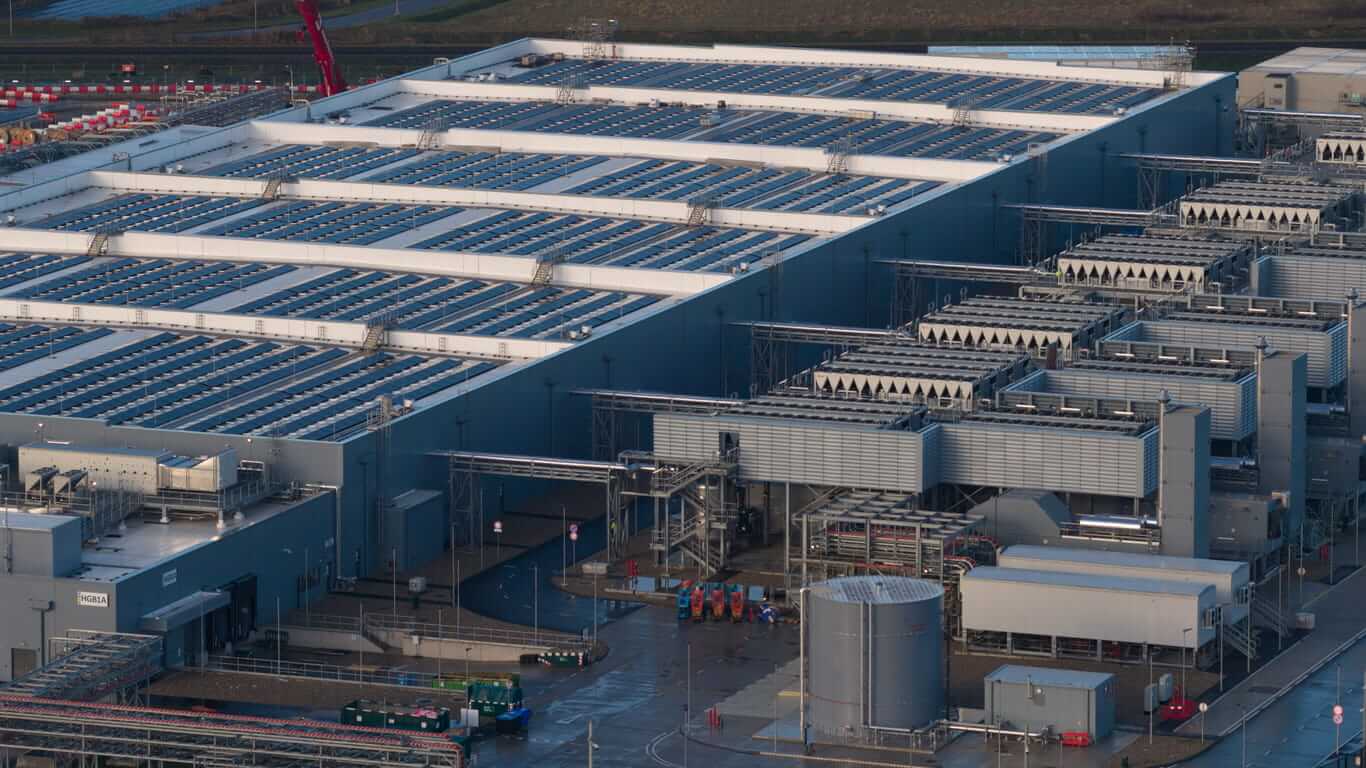
Behind every AI model and analytics platform is physical infrastructure for data management, and Texas has emerged as a global hub for data centers that support high-performance computing and large-scale data processing. Today, Texas ranks among the top states in the nation for data center investment, with facilities driving more than $53 billion in total economic impact and supporting over 90,000 direct and indirect jobs across the state.
Beyond digital capacity, the benefits of data centers for communities include significant job creation, expanded tax bases, and long-term economic resilience. Local economies often see substantial one-time construction jobs and ongoing operational employment, with property tax revenue funding essential services such as schools and emergency response.
For investors, data center growth signals confidence in Texas’s ability to support data-intensive industries well into the future, including AI, cloud computing, and analytics-driven innovation.
A Business Climate That Supports Data-Driven Growth
Texas’s approach to AI and big data analytics reflects a broader commitment to smart, business-friendly growth. The state combines:
- A massive, diverse economy generating actionable data
- Advanced computing and digital infrastructure
- A large, skilled, and growing workforce
- Reasonable regulations and a competitive cost structure
- Targeted business incentives in Texas that support long-term investment
Texas’s business-friendly environment, characterized by reasonable regulations, competitive operating costs, and long-term investment certainty, supports the adoption of advanced technologies like artificial intelligence and big data analytics across industries.
These fundamentals help explain why companies continue to expand data-driven operations in the state and why Texas remains a preferred destination for large-scale, analytics-enabled investment.
Together, these advantages are driving adoption across the industries driving growth in Texas, from technology and manufacturing to logistics, energy, and financial services.
Planning AI-Driven Investment or Data-Centered Expansion in Texas?
The Texas Economic Development Corporation (TxEDC) helps position Texas as a premier destination for AI- and data-driven investment by highlighting the state’s competitive advantages and supporting informed exploration of opportunities across regions and industries. As part of this role, TxEDC works alongside the Governor’s Texas Economic Development & Tourism Office and regional partners to help companies engage in thoughtful, data-informed discussions about growth in Texas.
Rather than serving as the authority on individual sites or incentive packages, TxEDC helps companies frame the right questions, understand how Texas aligns with their investment goals, and connect with the appropriate state and local partners for deeper evaluation and next steps.
Contact TxEDC to begin a high-level conversation about AI- and data-centered investment in Texas and to connect with the Governor’s economic development team as planning progresses.