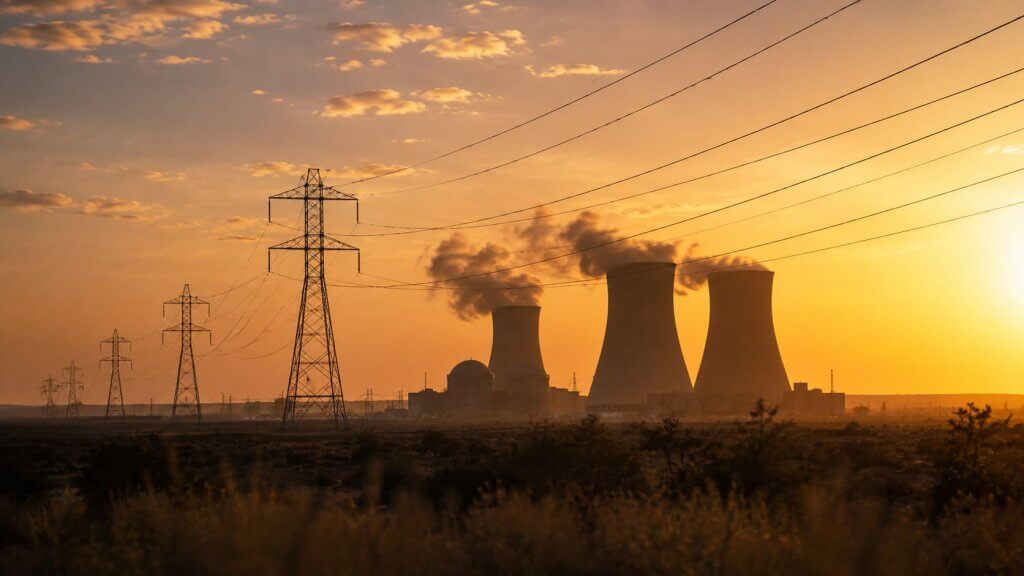
As artificial intelligence (AI), cloud computing, financial technology, advanced manufacturing, and hyperscale computing demand more physical capacity, Texas is becoming one of the most important locations for large-scale data center investment.
Here’s a closer look at why data centers in Texas are the next big thing.
Texas has moved from fast-growing contender to the number one primary data center market in the world in thanks to demand, supply, power, development pipeline, and market fundamentals, per Cushman & Wakefield.
Dallas-Fort Worth is a major anchor, but the Texas data center industry is expanding across Austin-San Antonio, Houston, Abilene, El Paso, and other regions where land, power strategy, fiber, and workforce can support large-load development.
That statewide footprint matters. Data centers increasingly require geographic diversity, power planning, speed to market, and proximity to enterprise users. Thanks to its unique offerings, Texas can support multiple data center models, including:

Texas led the nation in crude oil production, natural gas production, and wind-powered electricity generation in 2024, and it has one of the country’s largest solar growth stories, according to the U.S. Energy Information Administration.

Texas is also projected to have about 40 GW of data center power demand projected by 2028, per Bloom Energy.

Google announced a $40 billion investment in Texas through 2027 to build cloud and AI infrastructure, including new data center campuses in Armstrong and Haskell counties.

Meta announced that its El Paso data center campus will grow to 1 gigawatt and represent more than $10 billion in investment, with more than 300 operational jobs once complete
Data center site selection increasingly starts with power, and Texas offers one of the nation’s largest energy systems, supported by natural gas, wind, solar, storage, and emerging advanced nuclear planning.
The Texas energy sector gives developers multiple pathways to evaluate power procurement, generation partnerships, and long-term site planning.
Texas led the nation in crude oil production, natural gas production, and wind-powered electricity generation in 2024, and it has one of the country’s largest solar growth stories, according to the U.S. Energy Information Administration. Texas is also projected to have about 40 GW of data center power demand projected by 2028, per Bloom Energy.
Texas is also looking ahead. HB 14, passed in 2025, created the Texas Advanced Nuclear Energy Office and the $350 million Texas Advanced Nuclear Development Fund, adding another long-term energy layer for power-intensive industries.
As data center demand grows, Texas is taking a more deliberate approach to large-load development. In 2026, Governor Abbott directed the Public Utility Commission of Texas and ERCOT to verify data center projects moving through the interconnection process and emphasized that growth should add to Texas’ electric capacity, not only its electric demand.
For data center developers, that shift does not make Texas less pro-business. Instead, it makes site planning more disciplined as competitive projects will need to account for:
The Texas energy and digital infrastructure that supports power-intensive development remains a major advantage, but the strongest projects will be those that align new demand with new capacity, infrastructure investment and long-term grid resilience. The Lone Star State’s technical workforce pipeline also matters, as Texas’ technical workforce pipeline supports construction, electrical, mechanical, networking and operations roles needed to bring complex facilities online responsibly.
For companies reviewing Texas taxes and incentives, federal programs such as the CHIPS and Science Act may also be relevant where data center, semiconductor, research or advanced technology investments overlap.
Data center investment Texas momentum is being validated by some of the world’s largest technology companies:
These investments sit alongside broader growth from Vantage, Microsoft, AWS, Oracle, and other cloud, AI, and infrastructure companies, connecting Texas’ semiconductor, power, and compute story and Texas’ broader tech ecosystem.
The DFW data center market is Texas’ largest established data center hub, with deep enterprise demand, strong fiber connectivity, and growing hyperscale activity.
Red Oak and Ellis County are also emerging as an important DFW-adjacent growth node, with Red Oak’s business community including Google Data Centers, Compass Datacenters, PowerHouse Data Centers, DataBank, Gigabit Fiber, and Schneider Electric.
San Antonio brings cybersecurity, military, and public-sector technology strengths, giving the region a distinct role in secure digital infrastructure.
Abilene’s AI infrastructure boom is turning West Texas into a nationally visible AI compute market through Stargate and other hyperscale activity.
El Paso’s data center ecosystem is gaining momentum through Meta’s major campus, cross-border workforce access, and regional infrastructure investment.
Data centers are becoming economic infrastructure, supporting:
The questions of how data centers benefit Texas communities is also now part of the larger economic development conversation, as the impact can range from construction activity and local vendor demand to utility planning, workforce partnerships, and long-term tax base growth.
For companies and investors, Texas offers more than one data center market. It offers a statewide platform for energy-intensive digital growth.
Contact TxEDC to learn how Texas can support your infrastructure, investment, and long-term growth strategy. For project-specific guidance related to relocation, incentives, or expansion planning, companies should work directly with The Office of the Governor’s Texas Economic Development and Tourism Office.