Why Every Major Tech Company Is Building Data Centers in Texas
The physical requirements behind artificial intelligence, such as power, land, fiber, capital, and speed to market, are creating demand that outpaces available capacity in legacy markets. More companies are shifting toward places that can support large-load projects at scale, like Texas.
AI data centers in Texas are growing, supported by the Texas data center sector, expanding energy resources, major metros, and West Texas sites. Here’s what you need to know.
Texas Just Became America’s Hottest Data Center Market
The data center market is tight nationwide. Primary North American data center vacancy fell to a record-low 1.4% at the end of 2025, even as total capacity increased 36%, per CBRE.
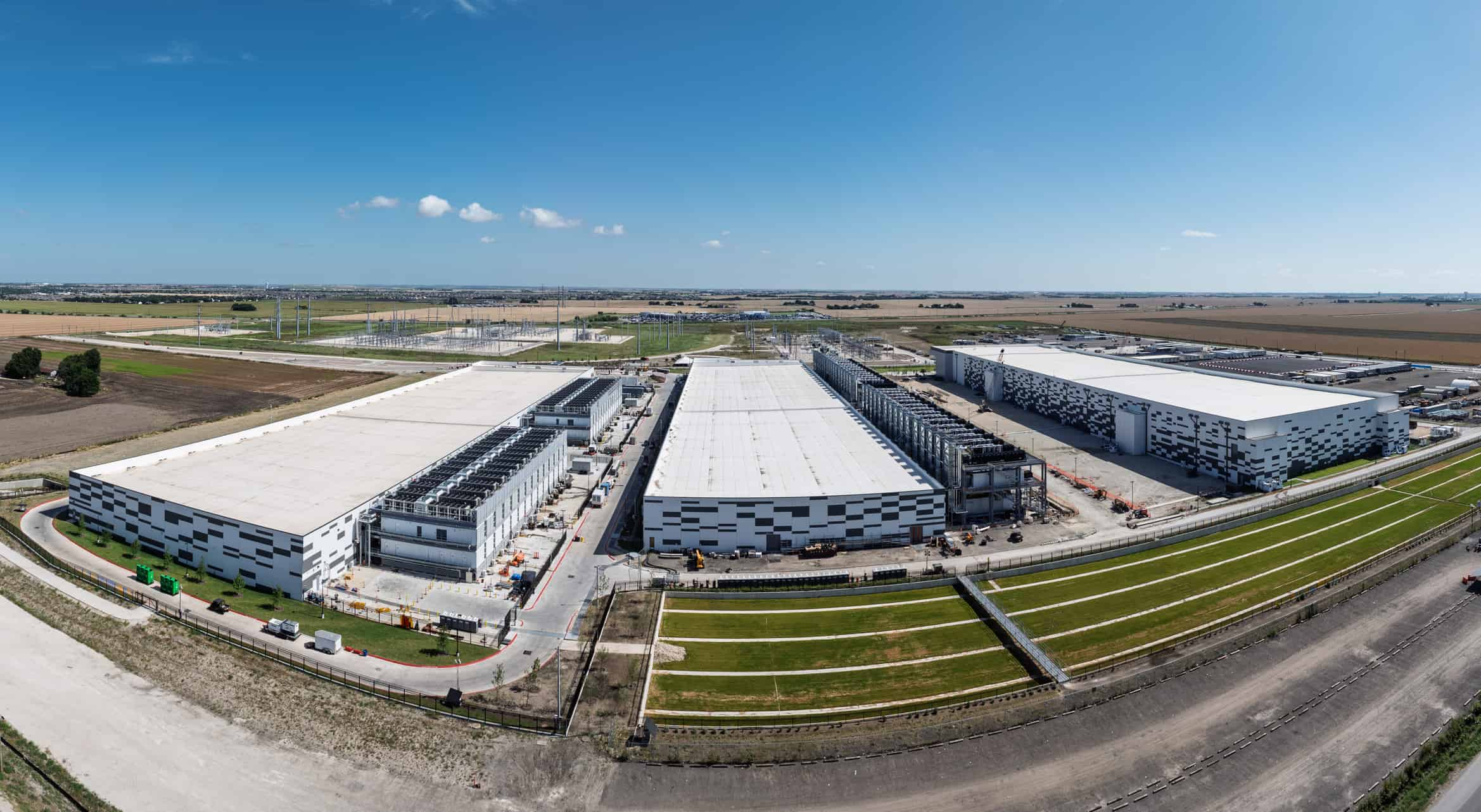
That market pressure is pushing new development into Texas. As a result, Dallas-Fort Worth has surpassed 1+ gigawatt of data center capacity (operational and under development, based on CBRE and Cushman & Wakefield market data), while Austin-San Antonio and West Texas are drawing more attention from AI and hyperscale users.
But why?
The Texas Advantage: Power, Land, and Speed to Market
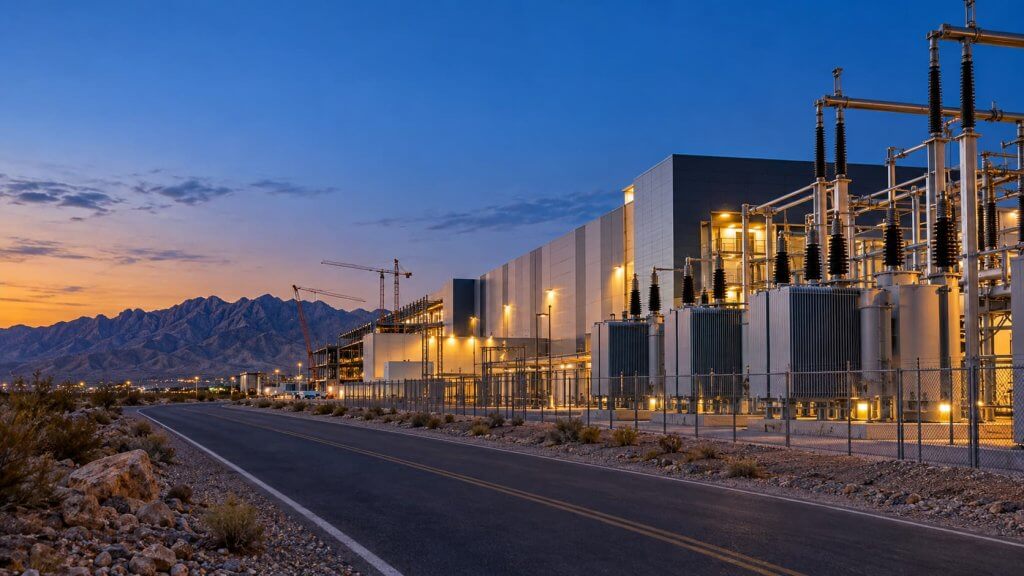
Data center site selection increasingly starts with power. Texas brings a large energy market, major natural gas production, utility-scale wind and solar, and growing storage capacity together with large industrial sites and transmission planning.
The Texas energy sector and Texas infrastructure give developers more ways to evaluate power procurement, interconnection strategy, and site scalability. Combined with the Texas business climate, The Lone Star State offers superior planning for projects where months of delay can affect billions in AI infrastructure investment.
Texas vs. Virginia, Arizona, and Oregon
Virginia, Arizona, and Oregon have long been major data center competitors. How do they stack up to Texas?
The Texas vs Virginia data centers comparison starts with scale. Virginia remains the world’s largest data center market, with 11.3 gigawatts of operational capacity, while Texas is emerging as one of the fastest-growing and most scalable regions, according to Cushman & Wakefield’s 2026 Global Data Center Market Comparison.
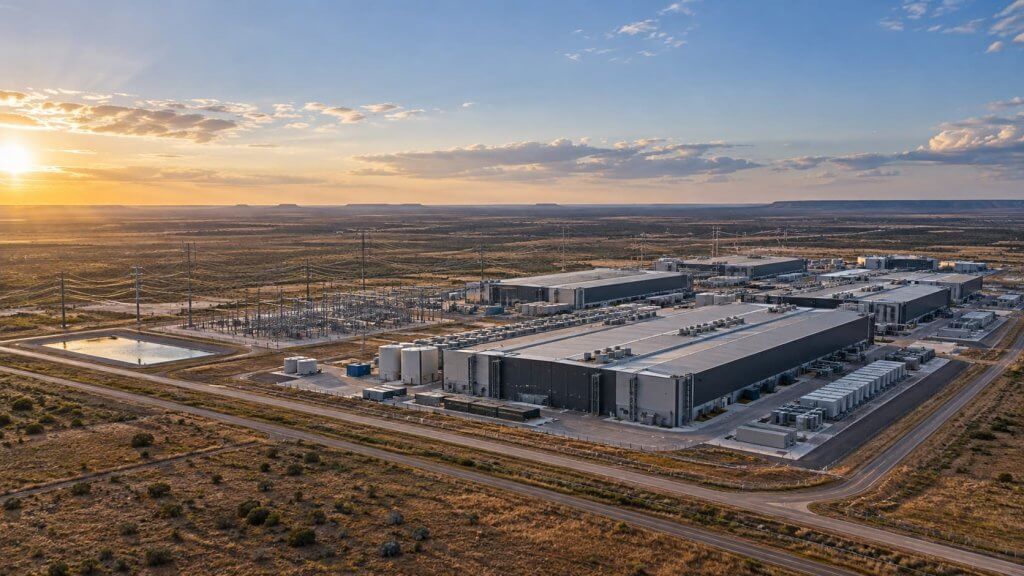
Arizona and Oregon remain important data center states, especially for cloud and enterprise workloads. But Texas now competes through a broader geographic footprint, thanks to the DFW data center market, Austin-San Antonio, El Paso, and Abilene’s AI infrastructure boom.
The Names Already in Texas: Google, Meta, OpenAI, Vantage, Microsoft, AWS
Momentum may be Texas’ strongest proof point:
- Google announced a $40 billion Texas investment through 2027 for cloud, AI, and data center infrastructure
- Meta announced a more than $10 billion El Paso campus
- OpenAI’s Stargate project is already operating in Abilene
- Vantage is advancing its Frontier campus in West Texas
Microsoft and AWS are also part of the state’s broader cloud and infrastructure growth story. Together, these companies show that hyperscaler Texas investment is moving from isolated projects to a statewide development pattern that not only increases the community impact of Texas data centers, but also makes The Lone Star State one to watch.
What Comes Next?
Texas remains one of the country’s most important growth markets for data centers because of its power strategy, land availability, business scale, and market momentum. The next phase, however, will be defined by responsible development as much as expansion.
Governor Abbott has directed PUCT and ERCOT to verify data center projects before they move forward, with standards focused on protecting the electric grid, conserving water, respecting neighborhoods, disclosing public incentives and ownership, and ensuring projects pay for needed electric infrastructure rather than shifting costs to Texas families and small businesses.
For developers, investors, and site selectors, the takeaway is practical: the strongest Texas data center projects will be those that bring jobs and capital investment while also planning for power, water, infrastructure, transparency, and community impact from the start. Texas is still pro-business, but its data center growth story is moving toward a more disciplined model that rewards projects built for long-term grid resilience and local economic value.
What Does This Mean for You?
TxEDC promotes Texas as a premier destination for business investment and helps companies understand the state’s competitive advantages. Contact us to learn how Texas’ data center growth can support your next expansion or investment strategy.